
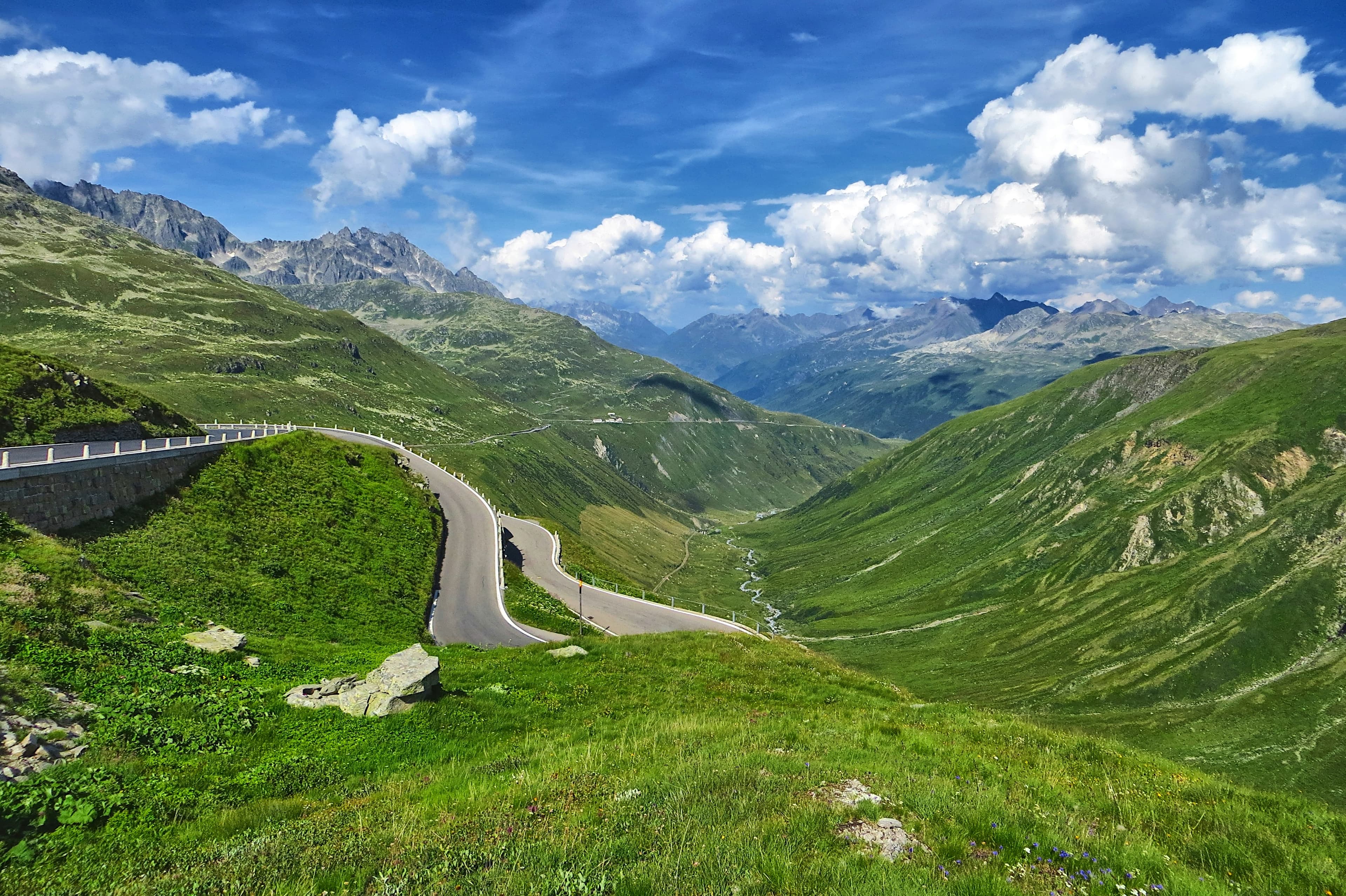
Switzerland is one of those places where the road is the destination. The hairpin to the Furka Pass. The vineyard descent into Lausanne. The long curve around Lake Lugano where the language shifts from German to Italian and the air smells different.
The Grand Tour of Switzerland is an official touring route that strings all of it together: 1,643 km through four language regions, past five alpine passes, across 41 lakes, and through some of the densest concentration of UNESCO World Heritage sites anywhere in Europe. Switzerland Tourism designed it as a single continuous loop with no wrong starting point — and no bad season if you time the passes.
It also happens to be one of the best EV road trips in the world.
Why electric works on this route
The physics favor you. Alpine switchbacks are where electric motors earn their reputation — torque from a standstill, no waiting for a gearbox to find the right ratio at 2,000 metres. On the way down, regenerative braking on a pass like the Furka or the Julier can recover a meaningful chunk of the energy you spent climbing. You arrive at the bottom with more range than you might expect.
The other mental unlock is overnight hotel charging. Swiss hotels on the tourist circuit — particularly the historic mountain hotels that anchor the Grand Tour — have increasingly added EV charging, often at modest rates or included with a room. The Grand Tour's average stage between major stops runs 50–80 km. That's well within any modern BEV's range even at altitude, which means you're not optimising your day around charger locations. You drive the route on the route's own terms.
The result is a trip that feels simpler in an EV than it does in a combustion car, not harder.
The route at a glance
The Grand Tour of Switzerland is a loop — Switzerland Tourism publishes it starting from Zürich, but any major city works as an entry point. The full circuit covers:
- Northeast (German Switzerland): Zürich → Schaffhausen (Rhine Falls, Europe's largest waterfall by volume) → Stein am Rhein → Appenzell
- Southeast (Graubünden): Chur, Switzerland's oldest city → St. Moritz via the Julier Pass
- South (Ticino): Bellinzona (three UNESCO castles) → Locarno → Lugano
- Central Alps: Andermatt, gateway to four major passes → Täsch for the Matterhorn (Zermatt itself is car-free; park at Täsch)
- West (French Switzerland): Montreux → Lausanne → Neuchâtel
- Mittelland: Gruyères → Interlaken → Bern → Lucerne → back to Zürich
The full loop is long enough that most travellers break it into two halves or focus on a region. We've mapped the complete circuit as a single Fernweh trip — download the GPX below — so you can load it, trim it to your schedule, and add stops as you go.
Key stops worth slowing down for
Schaffhausen and the Rhine Falls. The falls are genuinely impressive close-up — boat tours get you within metres of the main drop. The old town of Schaffhausen is one of the better-preserved in the country and often overlooked in favour of bigger names.
Appenzell. A half-day stop at most, but the architecture and the rolling Appenzell landscape heading south toward Chur are worth the detour from the Rhine valley.
The Julier Pass (Chur → St. Moritz). One of the drive highlights of the whole tour. The pass is open year-round, which makes it more reliable than alternatives like the Albula. The descent into the Engadin valley is the kind of road that makes you want to drive back up and do it again.
Bellinzona. Often bypassed in a rush to Lugano, but the three UNESCO-listed castles are extraordinary and the old town is genuinely Italian in character. Worth a lunch stop at minimum.
Andermatt. The town sits at the junction of the Furka, Gotthard, Susten, and Oberalp passes. Any combination of these roads is worth the time. The Furka Pass — the one from the Bond film — is open roughly June through October and is one of the most dramatic roads in Europe.
Täsch / Zermatt. Zermatt bans combustion cars but electric vehicles are allowed with a permit from your hotel. If you're staying overnight, confirm in advance — a permitted EV can drive into the village rather than parking at Täsch and taking the rack railway.
Gruyères. The medieval hilltop village lives up to every photograph. The cheese dairy below is worth the tourist queue. Stage it between Montreux and Interlaken.
A few places most guides skip
Taubenlochschlucht, a gorge walk near Biel/Bienne that takes about 45 minutes and is genuinely spectacular. Valangin, a small castle village just outside Neuchâtel. Unterseen, the quieter older settlement across the river from Interlaken that most day-trippers miss entirely. Winterthur's Steinberggasse, a well-preserved historic lane that rewards a quick walk if you're passing through on the Zürich–Schaffhausen leg.
Planning the trip: two ways to do it
Full loop — 12 days, ~1,400 km
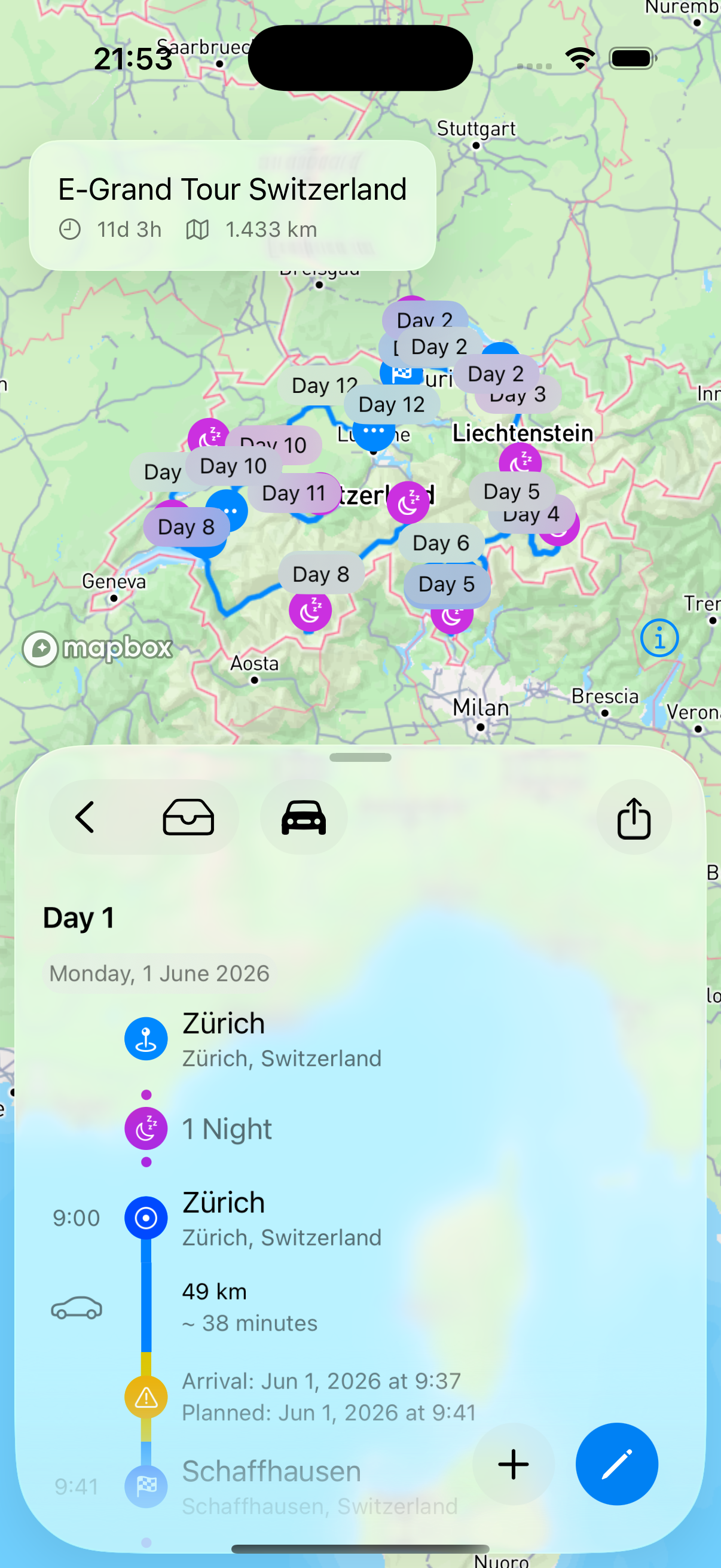
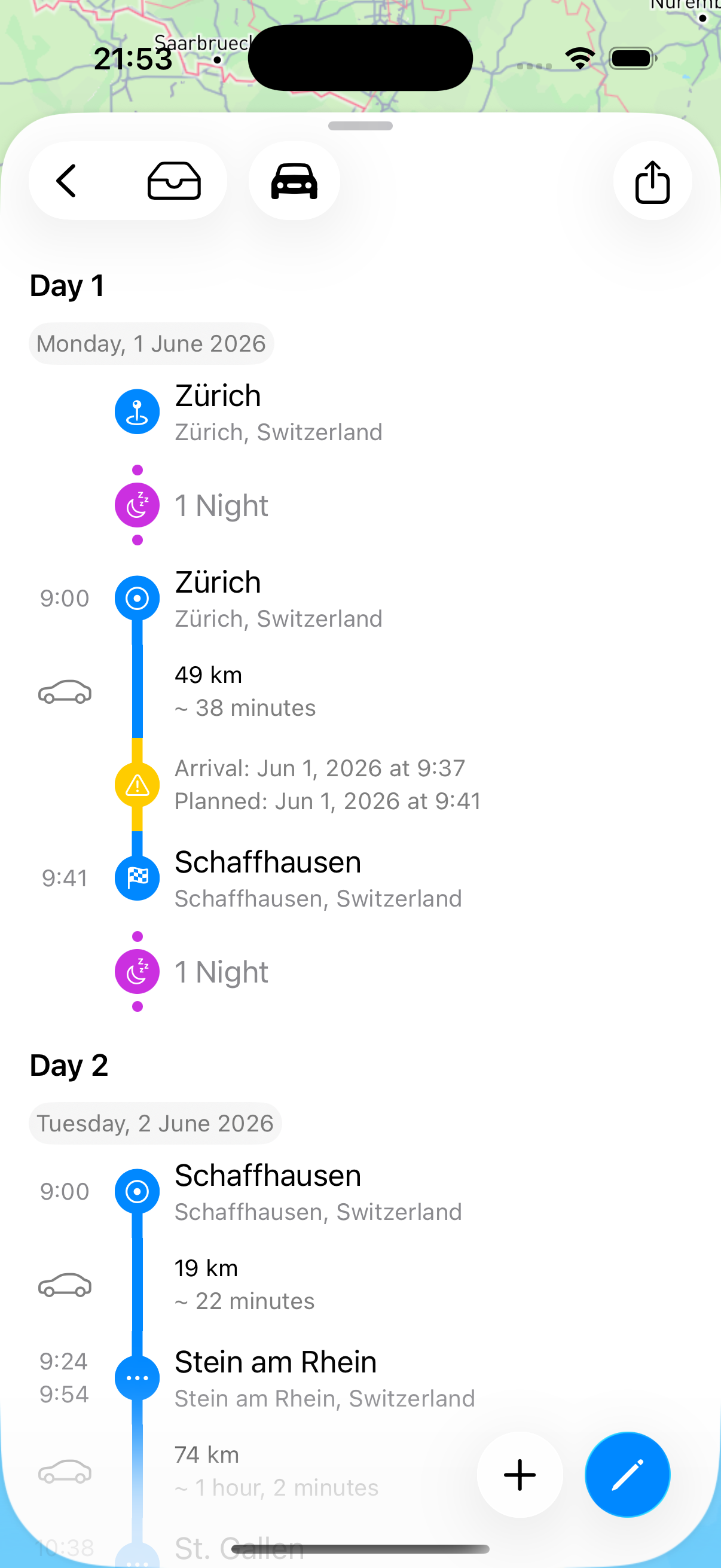
The complete Grand Tour as a single continuous trip. Twelve days is comfortable; ten is possible if you're a morning person and keep some stages as drive-through stops. The full Fernweh trip (20 stops) is mapped below.
West Switzerland focus — 5–6 days
If you have less time, the western arc is the most varied stretch of the route: lake scenery, French-speaking culture, and two of the best mountain approaches (Andermatt from Zermatt, then Gruyères into the Bernese Oberland). A focused western trip might run:
Bern → Thun / Thunersee → Neuchâtel → Lausanne → Montreux → Verbier → Andermatt → Interlaken → back to Bern
This loop is around 550 km and fits five days without feeling rushed. Bern to Thun is 30 km. Thun to Neuchâtel via the Jura foot runs along a wine road with lake views the whole way. Lausanne and Montreux are a pair — the Olympic Museum in Lausanne, the Freddie Mercury statue and Château de Chillon in Montreux. The climb to Verbier is optional but recommended if you want a mountain-village overnight.
Northeast and Central — 4–5 days
The German-speaking heartland plus the big alpine passes:
Zürich → Schaffhausen → Stein am Rhein → Appenzell → Chur → St. Moritz → Andermatt → Lucerne → Zürich
Around 500 km. The Julier Pass (Chur to St. Moritz) and whatever combination of passes you choose out of Andermatt are the driving highlights. Lucerne at the end is the natural unwind after the mountain sections.
Practical checklist before you go
Swiss motorway vignette. Required on Swiss motorways — an annual sticker (CHF 40) sold at the border, petrol stations, and post offices. There's no daily option; buy it if you plan to use any motorway, which the Grand Tour does extensively.
Alpine pass seasonality. The Furka, Susten, and Oberalp passes typically open in late May and close in October or November depending on snowfall. The Julier and Gotthard (tunnel) are open year-round. Check viasuisse.ch for current pass status — it updates in real time.
Hotel charging. Contact your accommodation in advance and ask about EV charging. Many Swiss mountain hotels have added charging points; fewer have fast charging. Plan on overnight top-ups as your primary strategy and treat public fast-chargers as backup rather than routine.
Zermatt permits. If you're driving into Zermatt rather than parking at Täsch, contact your hotel before arrival — permits are arranged through the accommodation and should be confirmed before you reach the valley.
Cash and cards. Switzerland uses Swiss Francs, not euros. Cards are widely accepted but a small CHF float is useful for tolls, parking machines, and small mountain shops.
Download and plan
We've mapped the complete E-Grand Tour Switzerland loop as a Fernweh trip — 20 stops, 19 legs, all the major waypoints through the Alps. Download the GPX and open it in Fernweh to adjust the route to your schedule, add or remove stops, and get driving-time estimates for each leg.
Download E-Grand Tour Switzerland GPX
Open Fernweh, import the file, and the full loop appears as a ready-to-edit trip. Trim it to a week, split it in two, or drive the whole thing — the route is yours to adapt.
Route facts sourced from Switzerland Tourism's Grand Tour. Fernweh trip distance (1,433 km, 20 stops) reflects the mapped loop; the official Grand Tour Switzerland measures 1,643 km and includes additional signed detours. Auto Motor und Sport covered the E-Grand Tour in 2026 — the first major automotive press to map it specifically for EV drivers.