
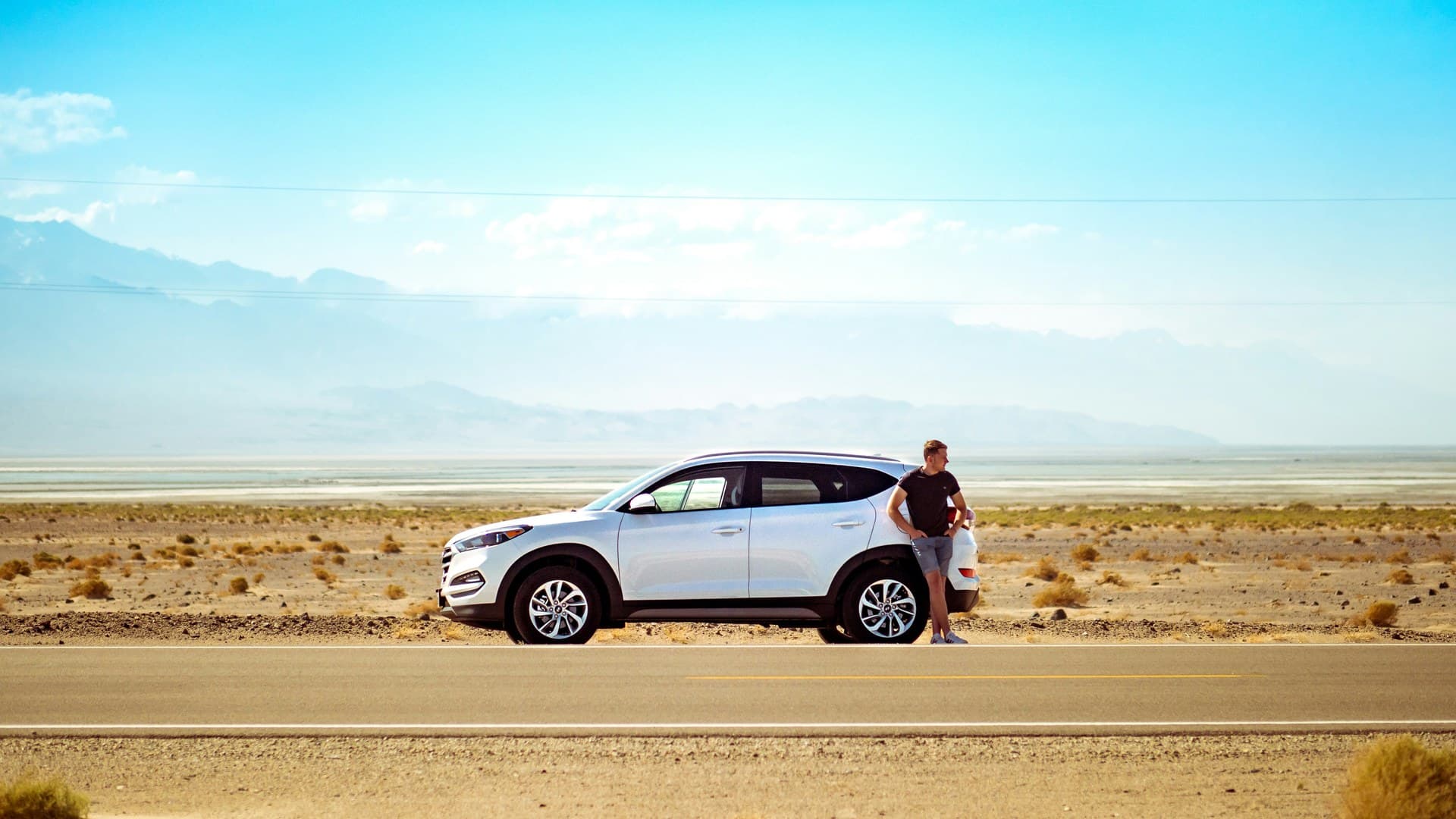
About four hours of driving a day, in stints of two hours or less, is a good ceiling for a road trip you want to enjoy. A day that only exists to cover distance can run longer. Keep those days rare, and plan them as what they are.
It's the number we gave in 7 things to know before your first multi-day road trip, and the ceiling we use for electric cars too. This is the longer answer: where four hours comes from, what moves it, and how to plan a day that actually comes out at it.
Why four hours, and not six?
Because the hours behind the wheel aren't the hours the day takes.
Britain's Highway Code recommends a break of at least 15 minutes after every two hours of driving. Add lunch, and the hour of slack we keep for everything a plan can't predict (a closed road, a slow town, a view worth stopping for), and a driving day grows quickly:
| Four hours of driving | Six hours of driving | |
|---|---|---|
| Driving, in two-hour stints | 4 h | 6 h |
| Lunch, between two of the stints | 1 h | 1 h |
| A 15-minute break between the others | — | 15 min |
| Slack for the unexpected | 1 h | 1 h |
| Door to door | 6 h | 8 h 15 min |
Leave at nine and the four-hour day has you checking in by three, with the afternoon still yours. The six-hour day gets you there at a quarter past five, and the drive was the day.
That table is planning arithmetic, not a measurement: put in your own lunch and your own slack. The shape holds anyway. Two more hours of driving cost more than two hours of the day, and they come out of the part you came for.
What do the rules for professional drivers allow?
Lorry and coach drivers in the EU may drive at most nine hours a day, extended to ten no more than twice a week, and must take a break of at least 45 minutes after four and a half hours at the latest. Those are legal limits for people who drive for a living, with rest periods built around them.
They make a useful ceiling, one a holiday day should never come near. A day planned to a professional's maximum is a shift, and you'd be working it on roads you don't know, with a car full of luggage and people.
When is it fine to drive more than four hours?
When the day exists to get you somewhere. A long first day from home to the region you came for is a normal shape for a road trip. Plan it as a transfer: an early start, the motorway, few stops, nothing booked that it can make you late for. Then give the next day back to the place, with the car parked.
When there are two of you to drive. Swapping at every break keeps each stint short. It doesn't turn a nine-hour day into a short one, though: the passenger seat is a break from steering, not from travelling.
When the road is the point. A mountain pass or a coast road you came to drive is the day's activity, not its transport. Count it in hours rather than kilometres, and stop as often as the views ask.
When should you plan for less?
With children in the car. Their limit usually arrives before yours, and the stops that suit them are ones you'll be glad of too.
On slow roads. Mountain roads, a string of villages, a city to cross at rush hour: none of them care how far it is on the map. Plan those days in hours, not kilometres.
After dark. The Highway Code also advises against long journeys between midnight and 6 am, when natural alertness is at its lowest. In autumn the light goes early, so make the day's last leg its shortest.
When you start tired. A long working day or an early flight before the first drive counts against the day. Rule 91 says it plainly: don't begin a journey if you're tired.
Does driving an EV change the answer?
Not much. On a four-hour day the charge can sit inside the lunch you were taking anyway, as we worked through in Is an EV a bad idea for a long road trip? Where an electric car really costs you time is the very long day: several charges, each one on the clock, none of them where you'd have chosen to stop. That's one more reason to keep those days rare. And when you plan a charge, plan the whole stop, not just the minutes on the charger: a charging stop is longer than the charge.
How do you plan a day that comes out at four hours?
Plan in days and legs, not in total distance. A trip's total kilometres say almost nothing about any one day, and it's the longest day that wears you out, not the average.
- Check each day's driving total, not the trip's. If one day comes to six hours and the next to two, move a stop.
- Break any leg longer than two hours with a stop you'd want anyway: a town for lunch, a viewpoint, a charger with a café.
- Start every driving morning at the same time. A fixed start makes the plan honest: you can see when each day really ends.
- Pin the arrivals that matter, such as a check-in, a booked table or a ferry, and let the plan tell you when a day can't make one.
Where Fernweh fits
Fernweh plans a trip as days made of legs. Open a day and three totals sit at the top: its driving time, its distance and its number of stops, so a six-hour day looks like six hours before you've packed. One daily start time, set once in Settings, decides when every overnight stop leaves unless you've pinned a departure yourself, so each morning starts where you said it would. And if you pin an arrival the day can't make, the stop says so ("Cannot arrive in time") and shows the earliest arrival the plan can manage.
None of that tells you how long your day should be. It makes sure the plan isn't hiding the answer.
The short answer
About four hours of driving a day, in stints of no more than two, is a good ceiling for a trip you want to enjoy. Drive longer only when the day's job is to get you somewhere, and give the next day back to the place you came for.
Break and night-driving guidance is Rule 91 of the Highway Code. Professional limits are the EU's driving time and rest periods rules for road haulage and passenger transport drivers. The door-to-door table is our planning arithmetic, not a measured trip. Fernweh behaviour described here reflects version 1.24.0 for iOS, released 14 September 2026. Header photo by Jamie Street on Unsplash.